
















Archbishop Carroll students have expressed pride about the Artemis II mission: the first crewed lunar mission since 1972.
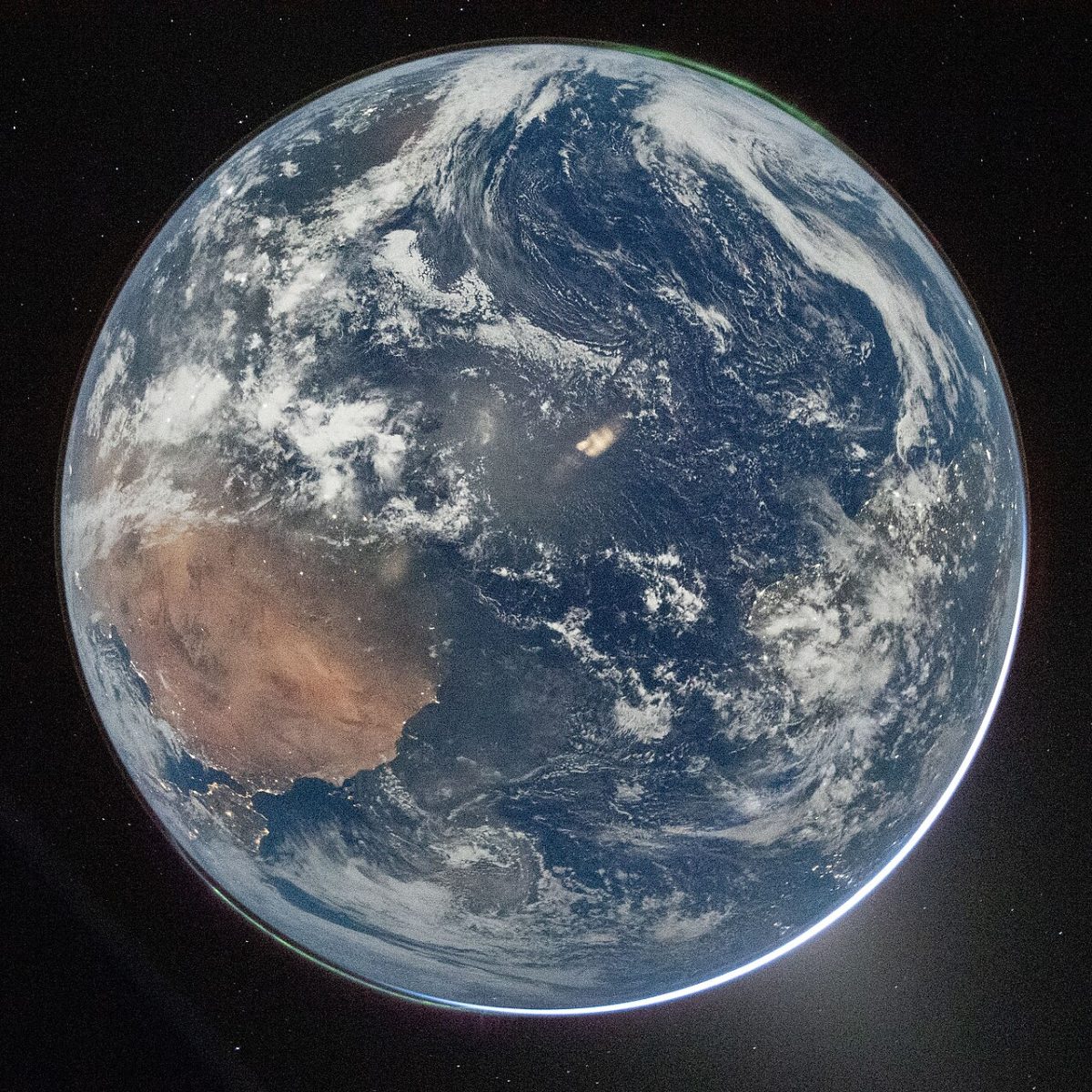
The mission’s four astronauts — Reid Wiseman, Christina Koch, and Victor Glover of the National Aeronautics and Space Administration and Jeremy Hansen of the Canadian Space Agency — broke the record for the greatest distance humans have ever traveled from Earth by travelling 252,756 miles during their 10-day journey, which began April 1 with a launch from the Kennedy Space Center in Florida. The previous record was established by Apollo 13 in 1970.
“I am amazed that the Artemis II crew [broke] the record for the farthest human travel from Earth,” said Thomas Bookstaber, a freshman.
In space, the Artemis II crew took photos of the far side of the moon. They captured many craters, ridges, mountains, and lava plains that were never discovered before. Scientists will use these images to understand how the moon formed, according to NBC.
“I am happy that people were able to see the far side of the Moon,” said Teresa Abraham, a freshman.
Besides exploring the dark side of the moon, among the mission’s objectives was to make sure the spacecraft and the mission’s procedures worked so there can be more space exploration in the future.
“I’m hopeful that astronauts will make a space station on the moon,” freshman Daryl Williams Jr. said.
The Artemis II mission ended on April 10. During reentry, the capsule — called Orion — that housed the astronauts was protected by a heat shield. Reentry is the most dangerous part of spaceflight, as the capsule can be heated up to 5,000 degrees Fahrenheit. This was evident in the earlier Artemis I launch when the uncrewed test flight had developed a crack in the heat shield during reentry. To keep the astronauts safe on Artemis II, NASA modified the flight path to make the capsule descend faster and steeper to decrease stress on the heat shield.
Following the successful reentry, the Orion capsule splashed down into the Pacific Ocean near San Diego with the crew safe and sound, according to the Associated Press.
An analysis of the Orion capsule to study how the heat shield performed during reentry will happen at NASA’s Kennedy Space Center in Florida, according to the AP.
Artemis III is expected to happen around 2027, with Artemis IV expected to happen in 2028, NBC reported. Artemis IV is projected to be include a lunar surface landing.